


Watch the webinar
On a 400-acre “mega-job” data center project just outside Reno, Nevada, manual weather monitoring is an impossible task. For Whiting-Turner, managing a 24/7 workforce that peaks at 3,000 people requires a safety system that is precise and fully automated.
During a recent industry webinar, Tom Travis, a Project Manager at Whiting-Turner, shared how the integration between Eyrus and Perry Weather has improved their approach to site safety.
By integrating Perry Weather with Eyrus, Whiting-Turner created a workflow where lightning detection and other weather alerts are triggered automatically and delivered only to the workers who are actually on-site.
A Large Site With Localized Weather Challenges
The climate in Nevada presents constant challenges. The region experiences extreme heat for much of the year, along with frequent high-wind events that can disrupt crane operations and elevated work.
As Tom Travis, a project manager with Whiting-Turner, explained during the webinar,
“Being in Reno, it’s obviously a super hot climate most of the year. We also get some pretty intense wind storms.”
Before deploying Perry Weather, the team relied on app-based tools that pulled regional data, often from the nearest airport—nearly 20 miles away. With surrounding mountains influencing wind and storm behavior, those readings were often misleading.
“There weren’t really any local readings outside of the airport,” Tom noted. “And we’ve also got some mountains that are around us, so that kind of impacts how we see winds and weather.”
Why On-Site Weather Stations Beat Public Weather Data On Apps
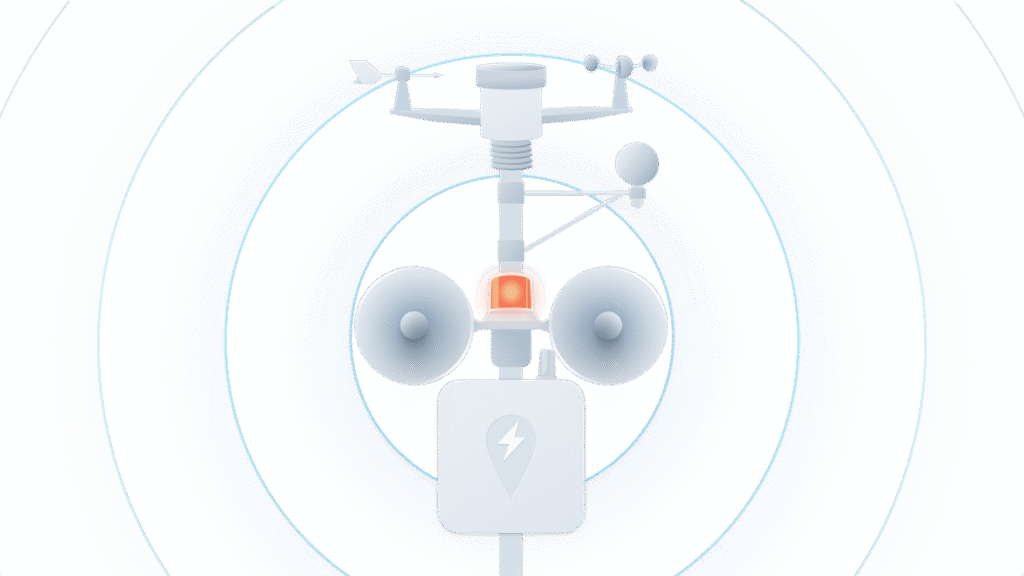
Relying on public weather data from a distant airport or a standard phone app is a liability for a general contractor. Micro-climates, especially in mountainous regions like Nevada, mean that conditions on a 400-acre site rarely match the nearest weather station 20 miles away.
“What they see at the airport may not necessarily reflect what we’ve got here,” Travis explains. “Having that system that’s right on top of the trailer I’m in… we know when there are gusts over twenty five miles an hour. It’s definitely a good, nice peace of mind.”
By installing a physical weather station on-site, Whiting-Turner ensures their heat index, wind speed and rain reading are hyper-local, providing accurate warnings only when the threat is real.
How the
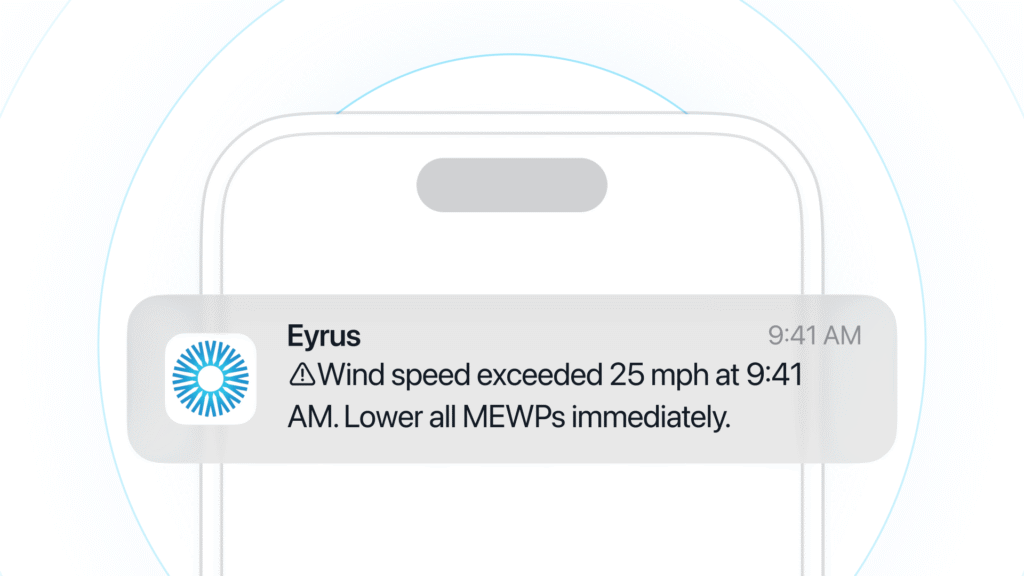
Inside Perry Weather, Whiting-Turner configures custom weather policies aligned with internal weather safety policies. Different conditions trigger different alerts with custom instructions on each.
Based on their current project needs in the Nevada desert, Whiting-Turner has the following weather alerts active:
1. Lightning Detection
Whiting-Turner keeps both L1 and L2 Lightning Policies toggled on.
- L1 Policy: This is the immediate “Stop Work” trigger for strikes in the closest proximity.
- L2 Policy: Acts as a proactive warning for strikes slightly further out, allowing the safety team to prepare for a potential stand-down without halting work prematurely.
2. Heat Index Alerts for Heat Illness Prevention
With the Reno site being a “super hot climate most of the year,” the Heat Index policies are essential.
For a crew of 3,000, manually tracking the heat index across 400 acres would be impossible. The system does the tracking and the notifying simultaneously.
3. Crane & MEWP Safety with Wind Speed Alerts
As Tom Travis noted, “Wind generally generates a stop work if it gets above a certain threshold… we know when there are gusts over twenty five miles an hour.”
By toggling these on, crews receive direct alerts the second a site-specific gust occurs, rather than waiting for a radio call.
4. Air Quality Index Monitoring
In regions prone to wildfire smoke or heavy site dust, “Air quality can shift on a dime,” according to Travis. These toggles ensure that if the air becomes hazardous, the workforce is notified to move to controlled environments or utilize PPE immediately.
Each policy includes clear, predefined instructions so workers know exactly what action to take. Those instructions can be delivered in both English and Spanish, ensuring consistent communication across a diverse workforce.
This removes ambiguity and eliminates the need for verbal relays or last-minute decision-making during weather events.
Eyrus Ensures Weather Alerts Reach Only the Right People
The most impactful part of the integration happens once alerts move into Eyrus.
Eyrus serves as Whiting-Turner’s badging and access control system. Every worker badges in when entering the site, giving the platform real-time awareness of who is physically present.
That awareness fundamentally changes how weather alerts are distributed.
“In an effort to limit nuisance texts,” Tom explained, “if you’re off the job site and you’re not connected, then the last thing you want to know about is a stand down that doesn’t affect you.”
Instead of sending alerts to everyone, Perry Weather alerts flow into Eyrus and are delivered only to workers who are currently badged in, along with Whiting-Turner employees who need situational awareness.
This eliminates the need to manually manage user lists inside Perry Weather as subcontractors change. New workers are automatically included when they badge in. When they leave the site, alerts stop.
One System for All Job-Site Messaging
For Whiting-Turner’s safety project management teams, another major benefit is consolidation. Eyrus already handles mass communication for the site, including safety incidents and operational announcements.
Weather alerts now live in the same system.
Instead of monitoring multiple tools, safety teams rely on a single platform where weather alerts, safety messages, and workforce data all live together.
Once configured, the system requires minimal day-to-day interaction.
“Once we set it up,” Tom said, “it just works in the background.”
Automatic Documentation for Claims and Compliance
Beyond real-time alerts, Perry Weather automatically records every weather event and its duration. That historical data becomes valuable long after the storm passes.
“One of the pluses is the system will actually document all of this information,” Tom said. “If you have a force majeure or you have a claim, it’ll save all that so you can include it in your report.”
For large, schedule-driven projects, that documentation helps teams justify delays and support compliance without relying on manual logs.
Safety is Productivity
In the world of mega-projects, technology should work in the background. By automating lightning detection and environmental policies, Whiting-Turner has moved the human element out of the data-collection phase and back into leadership.
As Tom Travis puts it: “Anything gives me time back or makes it so I don’t have to spend more time is ideal.”


