


The Real Lightning Risk Around Schools
Lightning can strike 10 miles or more from the heart of a storm, which means a bolt can hit your field while the sky above still looks blue.
From 2006 to 2024, lightning killed 492 people in the United States, and around 17% of lightning deaths in one NWS analysis happened during outdoor sports and recreation (soccer, golf, running, baseball, football).
Yet most school lightning safety “plans” look like this:
- An athletic trainer checks a free weather app or lightning tracker.
- Someone glances at the sky and the radar.
- If it “doesn’t look too bad,” practice continues.
That’s not a reliable lightning safety plan. This guide walks through what a real lightning detection system should do, why free apps and basic lightning detectors fall short, and how schools are using Perry Weather to automate a defensible lightning safety plan.
Where Most School Lightning Plans Fall Apart
Ask an athletic trainer how lightning calls work at their school and you will hear some version of: “We use a few lightning apps, watch the radar, and if we see something close, we clear the field.”
On paper, many districts reference national guidance. The National Lightning Safety Institute suggests suspending activities when lightning enters a 10 mile radius. NFHS and most state associations recommend:
- Suspending play when lightning is detected nearby
- Waiting at least 30 minutes after the last thunder or lightning before resuming
These are good rules. The hard part is applying them in the real world with real humans and three games going at once.

One coach uses WeatherBug, another checks a free lightning detector app that may or may not detect lightning accurately. Nobody is looking at the same lightning tracker or the same timing.
The result: One field clears, another keeps playing. Parents are confused and angry. If something goes wrong, there’s no shared record of who saw what, when.
Now imagine trying to do that across multiple campuses and tournaments. Without a centralized lightning alert system, you cannot enforce a consistent safety standard across a district.
Lightning Warning Systems for Schools Explained
If you want a modern lightning safety program, it helps to know what you are actually choosing between.
Free weather and lightning apps
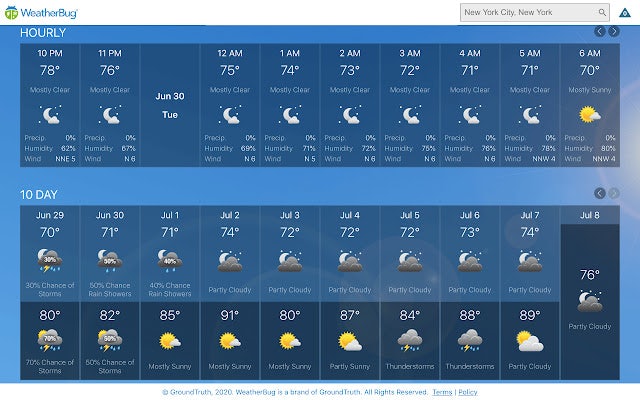
Free lightning apps like WeatherBug rely on radar or generic lightning overlays. They are fine for deciding if you should take an umbrella. They are not a reliable lightning alert system for a district full of kids.
| Pros | Cons |
| Everyone already has a phone | Data lag and coverage gaps |
| Low friction, zero budget line item | No clear “within 8 to 10 miles, stop now” automation |
| No automatic 30-minute countdown timer | |
| No central log you can pull later |


Standalone Sirens and Outdoor Warning Systems
Some schools install sirens or strobes that can be triggered manually or by very basic inputs.
| Pros | Cons |
| Loud and visible | Often not tied to a real lightning detection system or specific policy rules |
| Great for getting attention fast | No timestamped record of why or when it activated |
| Does not help an AD prove they followed NFHS or state guidance after the fact |
A siren is a useful part of a lightning notification system, but on its own, it is just a loud button.
Network-backed Lightning Detection Systems
Network-backed systems like Perry Weather utilize the National Lightning Detection Network (NLDN), employing hundreds of ground sensors to triangulate lightning strikes in real-time with sub-kilometer accuracy.
This is the same network trusted by organizations such as NASA and the U.S. Coast Guard. This is why schools are moving away from ad-hoc free weather apps and toward a network-backed lightning warning system for schools that can:
- Watch every campus and field in your district
- Apply your state or NFHS rules
- Send a clear lightning strike alert to the right people
- Prove what happened later
Perry Weather turns policy into action and tracks everything, bridging the gap between a simple lightning detector and a full-scale safety plan.
What a Lightning Safety Program for Schools Should Have (and How Perry Weather Delivers)
Plenty of free apps, radars, and even a basic lightning detector weather station can show you lightning within a certain radius. That is not the hard part anymore.
A lightning strike detection system for schools should combine:
- Real-time lightning detection in a defined radius around each campus
- Configurable rules, for example, suspend at 8 miles, resume 30 minutes after the last strike
- Automated alerts, web dashboards, and siren or strobe triggers
- Historical logs you can export on demand
The real difference between a basic lightning detection system and a modern lightning safety program is what happens after you detect lightning: who gets told, what they do, and how you prove it later. Here is what a defensible lightning safety plan for schools needs to do:
1. Turn Policies Into Automated Action
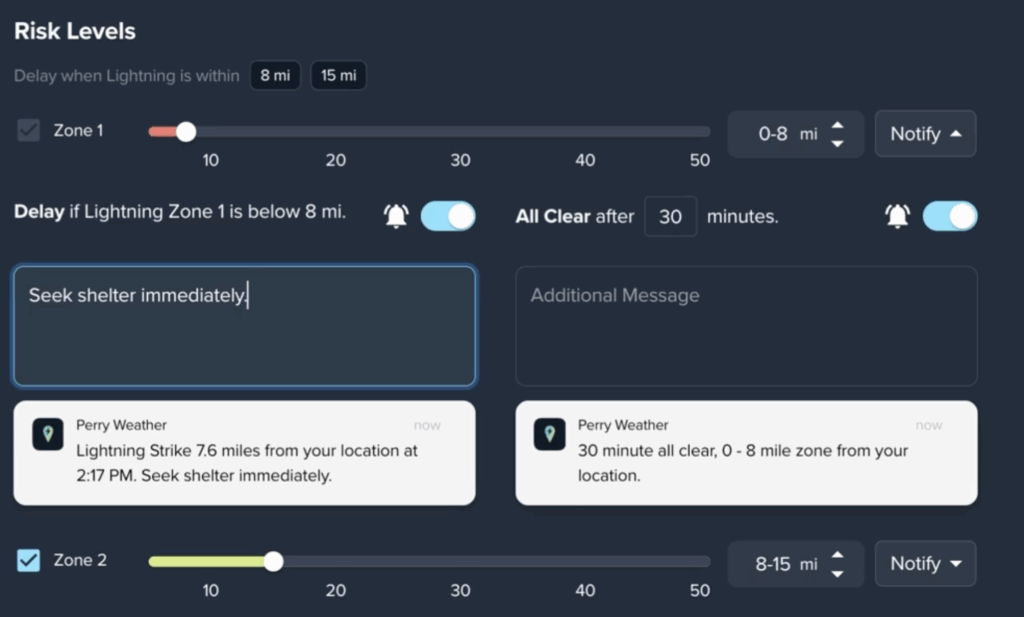
An effective lightning warning system for schools should do more than show strikes. It should enforce your rules for you. That means you can translate your policy into clear logic in the lightning alert system, for example:
- “If lightning is detected within 8 miles of any field, send a lightning strike alert to AD, AT, and head coaches.”
- “Start a 30-minute countdown and reset it every time a new strike occurs.”
- “Trigger the siren or PA when a strike enters the radius.”
Lots of apps can act like a simple lightning tracker. Very few can behave like a real lightning strike detection system that understands your policy and applies it consistently across every campus.
How Perry Weather Delivers
Arguments start when safety calls are subjective. Perry Weather’s lightning warning system ends the debate by turning your specific district policies into automated workflows. You turn your rules into simple “if this, then that” logic:
- “If lightning is detected within 8 miles, send alerts and start a 30 minute countdown.”
- “If a new strike occurs within 8 miles, reset the countdown.”
Real-World Use Case:
The Round Rock Multipurpose Complex manages massive tournaments with tight schedules. They rely on Perry Weather’s automated countdown timers to manage delays efficiently. Coaches and ADs see a live countdown timer instead of arguing about when they think the last strike happened.
2. Instant Communication Across Every Channel
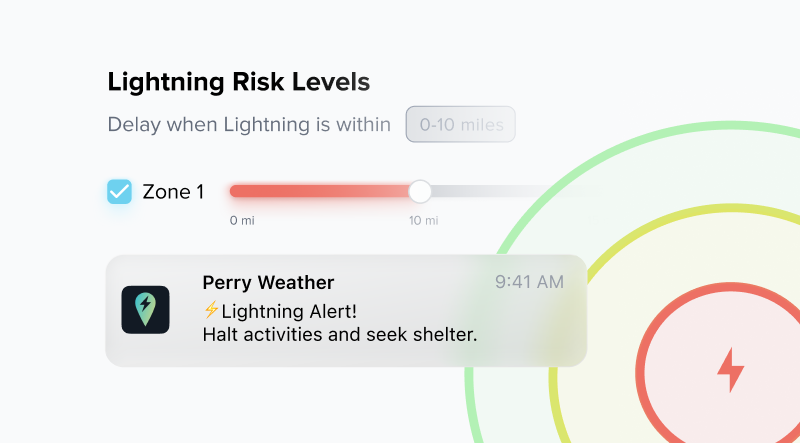
When your rules fire, everyone should hear the same message at the same time. A proper lightning notification system will:
- Push alerts through text, email, and app notifications
- Trigger outdoor warning systems, strobes, or PA where installed
- Show a visible countdown timer so nobody is guessing
That is how you stop the “AT knew, coaches didn’t” scenario. Your lightning warning system becomes the single source of truth.
How Perry Weather Delivers
When a lightning strike alert is triggered, speed is everything. Perry Weather notifies everyone simultaneously across multiple channels, pushing alerts through:
- Text and email
- In app and push notifications
- Integrated outdoor warning systems like sirens and strobes
- Optional PA integration
That means your weather station with lightning detector hardware is no longer just blinking in the corner of a press box. Everyone receives the same message from the same lightning alert system, at the same time.
3. Clear, Actionable Safety Protocols
Lightning alerts should plug straight into your Emergency Action Plans, not live in a separate “weather” workflow. For each venue, you should know:
- Where every group goes when an alert hits
- Who is responsible for clearing stands, restrooms, and sidelines
- How and when roll is taken
A modern lightning detection system makes it easy to tie alerts to specific fields, user groups, and actions, instead of hoping everyone interprets the same radar image the same way.
How Perry Weather Delivers
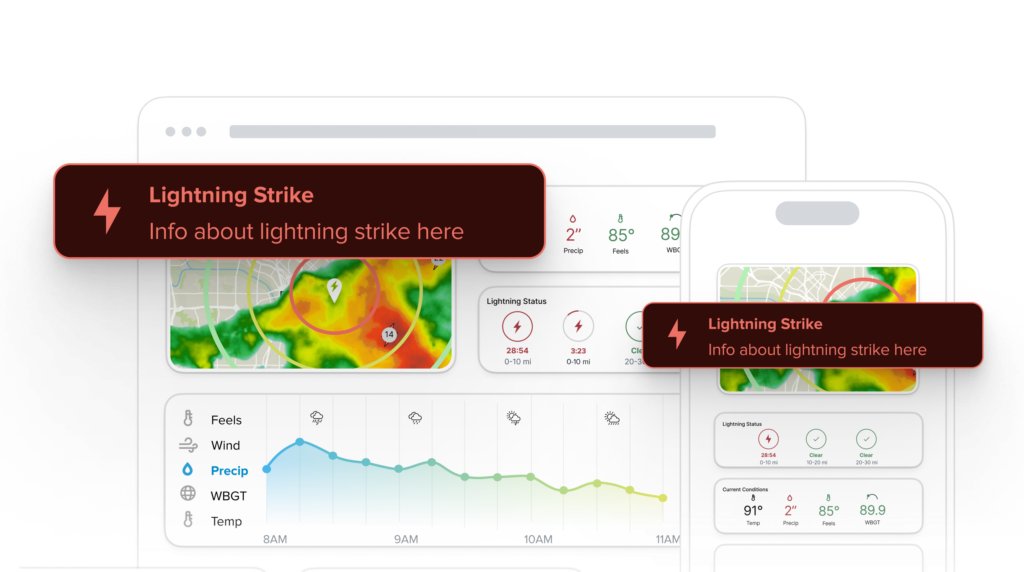
Perry Weather replaces guesswork with a lightning warning system that monitors, alerts, and documents for you.
When a lightning strike alert is triggered, speed is everything. Perry Weather notifies everyone simultaneously across multiple channels, pushing alerts through:
- Text and email
- In app and push notifications
- Integrated outdoor warning systems like sirens and strobes
- Optional PA integration
That means your weather station with lightning detector hardware is no longer just blinking in the corner of a press box. Everyone receives the same message from the same lightning alert system, at the same time.


4. Defensible Data for Every Decision
Finally, you need receipts. If a parent, district leader, or state association asks what happened during last Friday’s storm, “we think we saw something on an app” will not cut it.
How Perry Weather Delivers
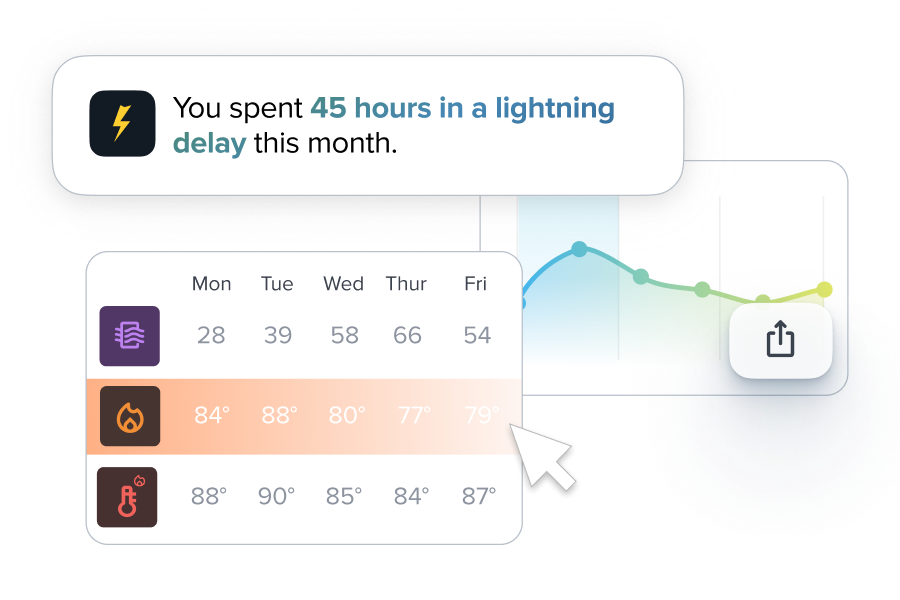
Every lightning strike alert, policy trigger, and all clear is logged with a timestamp and distance. You can:
- Export a full lightning delay history for a game, season, or entire school year
- See exactly how long each facility spent in delay
- Schedule automatic weekly or monthly reports to your AD, risk manager, or district office
When a parent, board member, or state association asks what happened, you are not reconstructing events from memory. You are pulling the report.
- Every strike inside your defined range
- Every alert that went out and to whom
- When activities were suspended and when “all clear” was issued
Policy activity reports help risk and audit teams show how decisions are lined up with written rules. That’s the difference between “we think we followed our policy” and a defensible record from a modern lightning strike detection system.


5. 24/7 Meteorologist Support for High-Stakes Decisions

Many Perry Weather plans also include 24/7 access to professional meteorologists. They help with borderline situations like splitting cells or complex storm motion. The goal is not magic forecasts. The goal is better context for high stakes decisions.
Put together, Perry Weather provides a connected lightning detection system that helps you detect lightning in real time, alert the right people on the right channels, and prove every decision you made when it counted.
Turning Lightning Rules Into an Actionable Plan
So how do you move from “we watch the sky” to a defensible lightning safety program? Here is a practical path you can follow.
1. Assign a lightning safety risk manager
Pick a clear point person. Often this is the athletic trainer, athletic director, or district safety or risk manager. Their job is to:
- Own the lightning policy
- Monitor how it functions in real time
- Coordinate with principals, coaches, transportation, and facilities


2. Define your policy in plain language
Write the rules in simple terms first. For example:
- “At 10 miles: heads up, monitor.”
- “At 8 miles: clear all outdoor fields and playgrounds.”
- “At 6 miles: all outdoor activities suspended, no exceptions.”
- “Return to play 30 minutes after the last detected strike within 8 miles.”
This is the logic your lightning alert system needs to follow.
3. Map the policy to technology
Next, build these rules into your lightning detection system:
- Create a rule per campus or per field
- Set distance thresholds for each rule
- Assign user groups to each rule, such as ATs, coaches, ADs, principals, security, transportation
- Connect relevant rules to outdoor warning systems and PA systems where you have them
This is where you naturally lean on terms like lightning sensor, lightning tracker, lightning strike detection system, and lightning strike alert. You are telling the system exactly when to alert and whom to alert.
4. Set up communication templates
Do not wait for a storm to write messages. Prepare short, clear templates:
- “Lightning detected within 8 miles. Clear all outdoor areas now. Countdown to reassess: 30 minutes.”
- “Lightning all clear. 30 minute countdown completed. Activities may resume at [time].”
- Parent notifications for postponed games or delayed kickoffs
Then connect these templates to your lightning notification system, so messages go out automatically when policies trigger, not when someone remembers to send a group text.
5. Audit and review after each storm
After significant events, use your lightning detection system logs to review:
- When lightning entered your radius
- How quickly fields were cleared
- Whether any policies need tuning
You cannot promise that nothing bad will ever happen. You can show that you followed accepted guidelines and made faster, better decisions with the tools you had.
Lightning Safety for Schools FAQs
What is the difference between a consumer lightning app and a professional lightning warning system?
Consumer weather apps often rely on delayed lightning radar data. A professional lightning warning system uses a dedicated network to detect lightning with precise location data in real-time, ensuring your school’s safety protocols are triggered immediately.
Do we need a standalone lightning detector weather station?
While a weather station with lightning detector capabilities is a good start, it is often isolated hardware. Perry Weather provides a connected lightning detection system that links that on-site data to a broader network, sending alerts directly to phones and scoreboards rather than just displaying them on a console in an empty office.
How does a lightning notification system help with liability?
An automated lightning alert system removes human error. By using a lightning strike detection system that automatically logs when storms enter and exit your area, you create a permanent record that proves your district followed national safety guidelines.
Practical Checklist: Is Your School Lightning-Ready?
Use this as a quick gut check for your current lightning safety plan for your school:
- Do we have a written lightning policy with a clear strike radius (for example, 8–10 miles)?
- Does everyone use the same lightning warning system, or are coaches and ATs juggling different apps?
- Do our rules match NFHS or state guidance for “suspend now” and “30-minute wait to return”?
- Do we have venue-specific Emergency Action Plans that spell out where students go during a lightning strike alert?
- Can we pull a report tomorrow that shows exactly when lightning entered our radius, when alerts fired, and when we gave the all-clear for last Friday’s game?
- If a parent, superintendent, or lawyer asked “Why did you make that call?”, could we prove it with more than screenshots and memory?
- Do our coaches and ATs know who makes the call to suspend/resume?
If your answer to any of these is ‘not really’ or ‘I’m not sure,’ it may be time to move from free apps and gut feelings to a lightning warning system built for schools.


Automate Lightning Safety with Perry Weather
Perry Weather helps school districts detect lightning in real time, turn NFHS and state guidance into policy-based alerts, and keep a defensible log of every weather call.
School districts like West Orange High School and Round Rock Complex are already using it to get everyone on the same page, clear fields faster, and show their work when storms roll in.
Ready to move from scattered apps to a single, policy-driven lightning notification system that helps protect your students and your program?
Try Perry Weather free for 14 days and see what a modern lightning safety program looks like on your own campus.


