


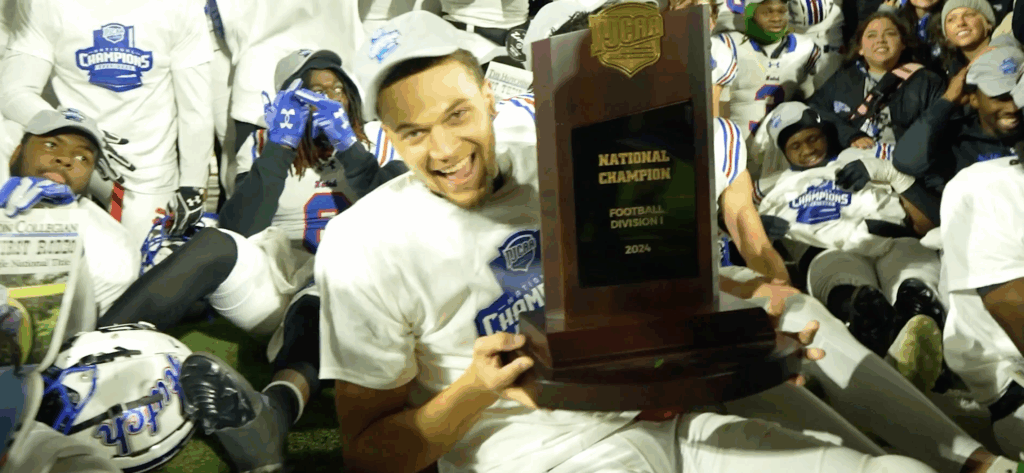
When a team wins a National Junior College Athletic Association (NJCAA) championship, the celebration is visceral. It isn’t polite applause. It is a dogpile in center field.
“Most of our student-athletes will only get that chance once. We need to get it right.” says Dr. Brett Monaghan, NJCAA Vice President for Championships, Membership, and Sports Governance.
But for years, “getting it right” meant dealing with the constant uncertainty of the weather.
Historically, the decision to clear the field or play on, lived in a messy middle ground. Hosts used different consumer apps and varied from site to site. Policies were often vague or locally interpreted. Everyone meant well, but no one had a single, trusted standard.
That gap is why the NJCAA recently made a historic move to standardize collegiate athletics weather safety across all 57 of its national championships.
This is how they moved from a patchwork of local apps to a unified safety platform with Perry Weather, and what other athletic directors and conference leaders can learn from their journey.
The Scope of the Responsibility
Founded in 1938, the NJCAA has built a reputation around opportunity, becoming the first national collegiate body to offer women’s championships in 1975, years before the NCAA followed suit.
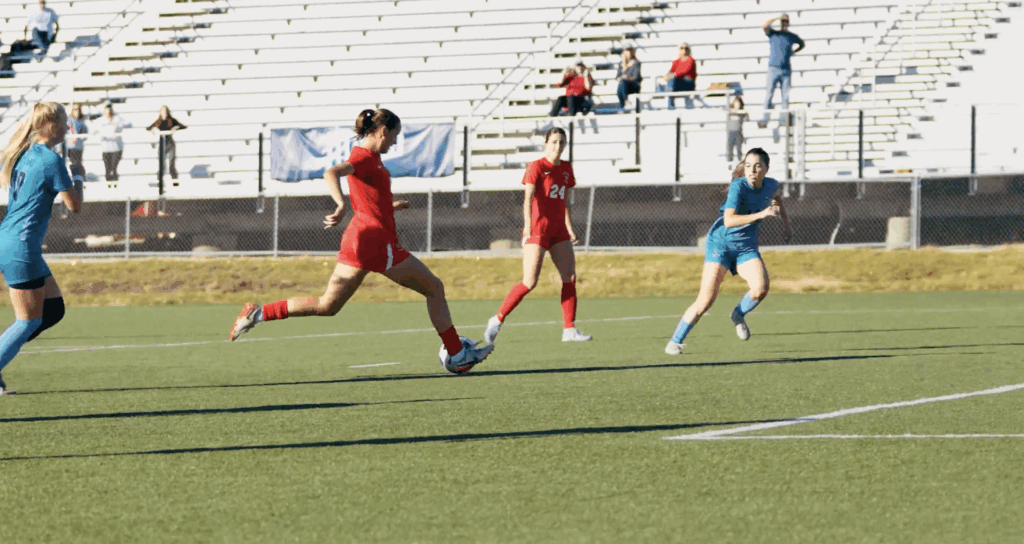
Today, the responsibility for maintaining that legacy falls on a dedicated staff in Charlotte, North Carolina. Leaders like Monaghan and Chris Haley, Senior Director of Partnerships and Development, oversee an ecosystem that is massive in scope:
- 60,000+ student-athletes
- 5,000+ coaches
- 500+ member colleges
- 57 national championships
- 42 different host sites across 44 states
This geographical spread presents a unique challenge for severe weather monitoring for sports. In the fall, a cross-country championship in Wyoming might face snow and sub-freezing wind chills. In the spring, a softball tournament in Alabama might battle extreme heat and humidity. In the Midwest, baseball championships are a constant dance with fast-moving squall lines and lightning.
“We are in the people business,” says Haley. “Fan safety, player safety, coach safety are paramount. Whether we are dealing with heat, cold, or storms, we need to pass the best information possible to the people on the ground.”
The Problem with Patchwork Data
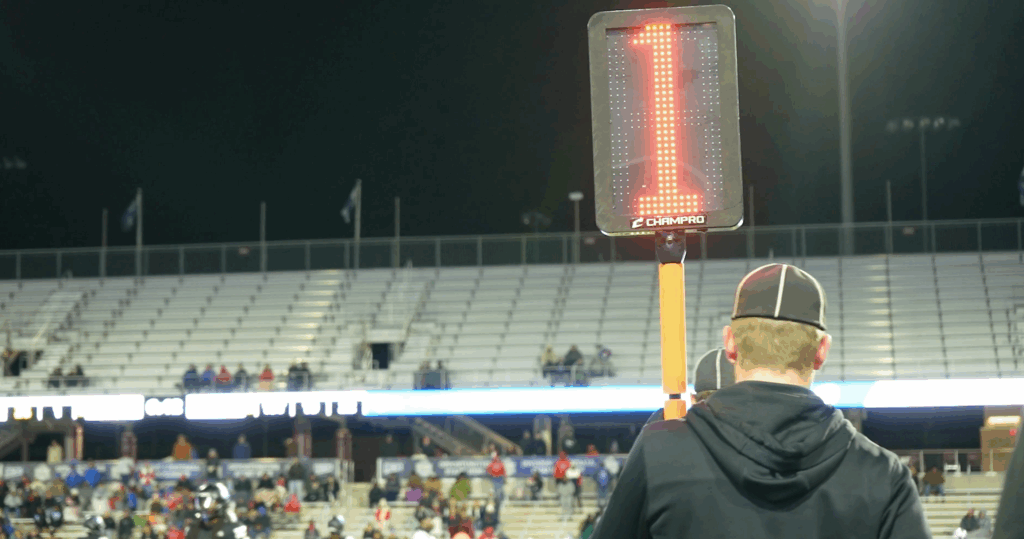
For decades, weather decisions at championships were delegated to local hosts. The NJCAA provided the framework, but the execution was left to the “home field” staff.
Without a centralized weather safety platform, there was no consistency. “Hosts had their own apps. Our staff had theirs,” Monaghan recalls. “Everyone wanted to know which one we were using, what the policy was, and when to shut things down.”


This created a “Grey Zone” where ambiguity creates risk. The risks of this patchwork approach were threefold:
- Safety Variance: Different tools detect lightning at different distances and speeds. A storm that pauses play at one site might be ignored at another.
- Competitive Fairness: If one site delays a game for three hours and another pushes through similar conditions, the integrity of the championship is compromised.
- Operational Stress: Without a clear standard, hosts and NJCAA staff are left guessing.
This tension came to a head at the Division I Baseball World Series in Grand Junction, Colorado.
The Turning Point in Grand Junction

Grand Junction is a premier event, but the weather there can be volatile. During a recent championship, storms began to fire up around the stadium. The game was underway. The stakes were high.
“We ran into some situations where we had lightning in the area,” Monaghan says. “I had a lot of different folks coming in my direction saying, ‘When do we need to shut this down? What is the policy? What app are we looking at?’”
There was no unified answer. Coaches were frustrated. Umpires were looking for guidance.
“I am a big believer in consistency,” Monaghan says. “It helps our staff, it helps hosts, and most importantly, it keeps student-athletes and fans safe. We didn’t have that consistency.”


The “Derecho” Reality Check

While Monaghan was dealing with the operational headaches in Colorado, Chris Haley recalls a Friday evening in June 2012, while he was working at a golf club in Blacksburg, Virginia. The evening started calmly, but a massive weather system known as a derecho—a widespread, long-lived wind storm—was racing toward them.
“It came through around 8:30pm,” Haley says. “We had about 175 acres. We lost over 200 trees that night. It was a constant reminder that it only takes one event. One lightning strike, one rapid wind event.”
For Haley, the lesson was clear: You cannot rely on luck or instinct. “You have to lean on common sense, technology and local meteorologists to make sure you are doing the right thing.”
How Perry Weather Unified 57 Championships Under One Standard
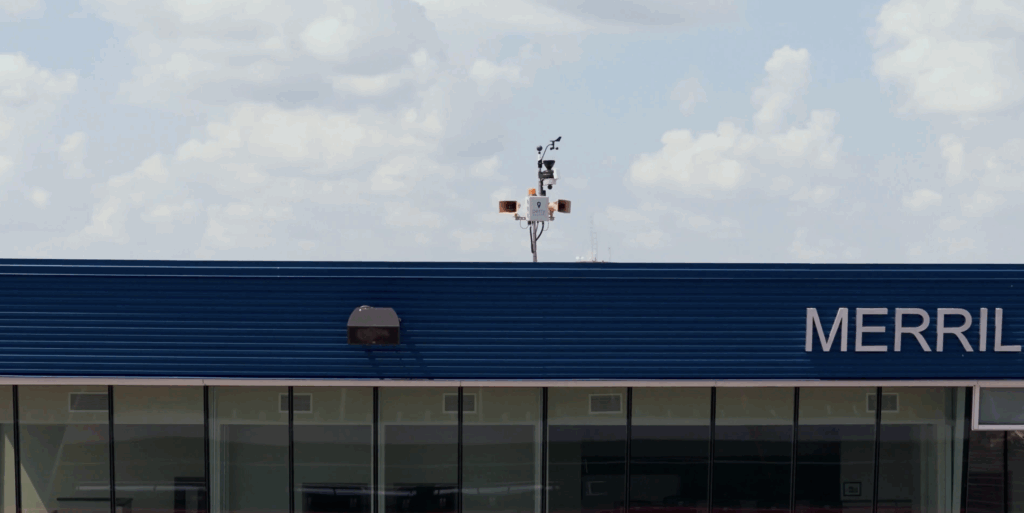
Following the Grand Junction experience, the NJCAA leadership decided they could no longer treat weather as a local variable. They needed a national standard and a partner that could handle the diversity of their 42 sites and provide a single source of truth for every decision-maker.
They chose Perry Weather.
The decision wasn’t just about buying software; it was about overhauling their entire approach to NJCAA weather policy and governance. Here is why the partnership made sense for an organization responsible for 60,000 lives.
1. Trusted by Many Collegiate Member Conferences
The NJCAA didn’t have to look far for proof of concept. Several of their member conferences, including the Kansas Jayhawk Community College Conference, were already using Perry Weather to manage collegiate athletics weather safety.
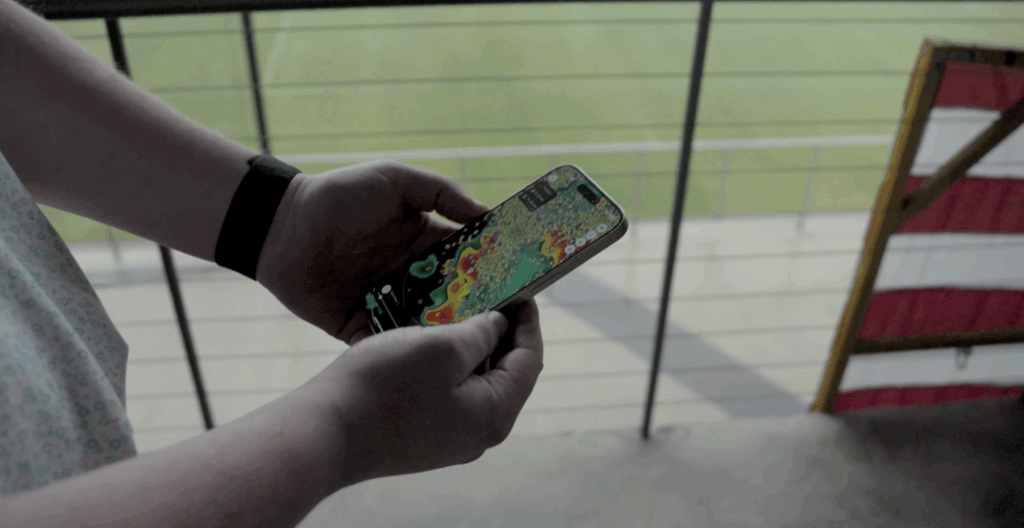
“We saw the Perry Weather app at work with our hosts,” Monaghan says. “It gave us a real look at how it operates on game day. We weren’t starting from zero. People we knew and trusted were already using it.”
2. A Single Source of Truth for All Seasons
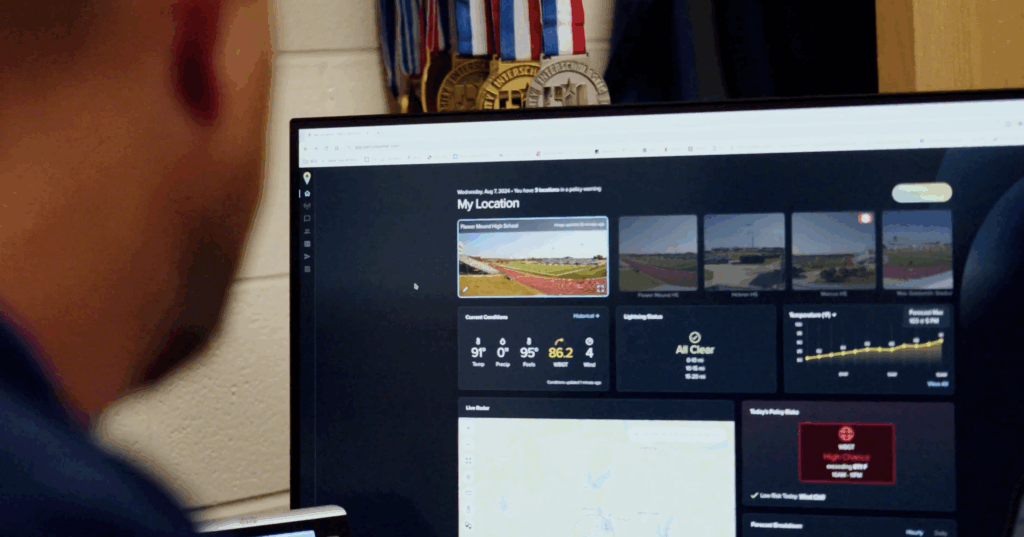
The NJCAA didn’t want five different apps for five different sports. They needed lightning detection for universities that could also handle wet bulb globe temperature (WBGT) for heat safety and wind chill monitoring for winter sports.
Perry Weather provided a unified dashboard that works across every season.
- For Baseball/Softball: Real-time lightning detection with precise radius alerts.
- For Cross Country: Wind chill and frozen precipitation monitoring.
- For Summer Training: WBGT monitoring to prevent heat illness.
“If NASA is using you guys, what are we doing?” Monaghan jokes, referring to Perry Weather’s clientele. “They are doing things way beyond what we are doing. When you look at the partnerships Perry Weather has, it was clear this was the one.”
3. Turning Policies into Automated Action
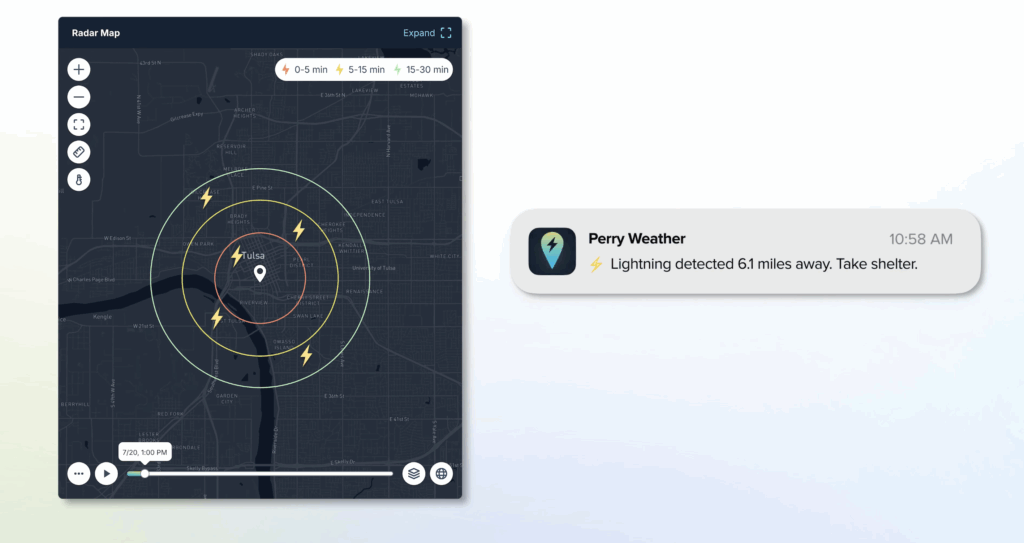
Perhaps the biggest shift was operational. A policy in a handbook is passive; it requires someone to read it, interpret it, and choose to act. Perry Weather turns student-athlete safety standards into active, automated workflows.
With Perry Weather, the NJCAA’s specific safety parameters (e.g., a 10-mile lightning radius) are pre-loaded into the software.
- The Alert: When a strike occurs within the radius, every decision-maker is notified
- The Countdown: A visible countdown timer appears on the dashboard. Everyone knows exactly how long the delay will last.
- The All-Clear: The system resets automatically if another strike occurs, and issues an all-clear only when it is safe.
“What I like is that decision-makers see the same information,” Monaghan explains. “If we are within the radius, we know what actions to take. It removes questions when safety is on the line.”
4. The Human Element: Meteorologist Support
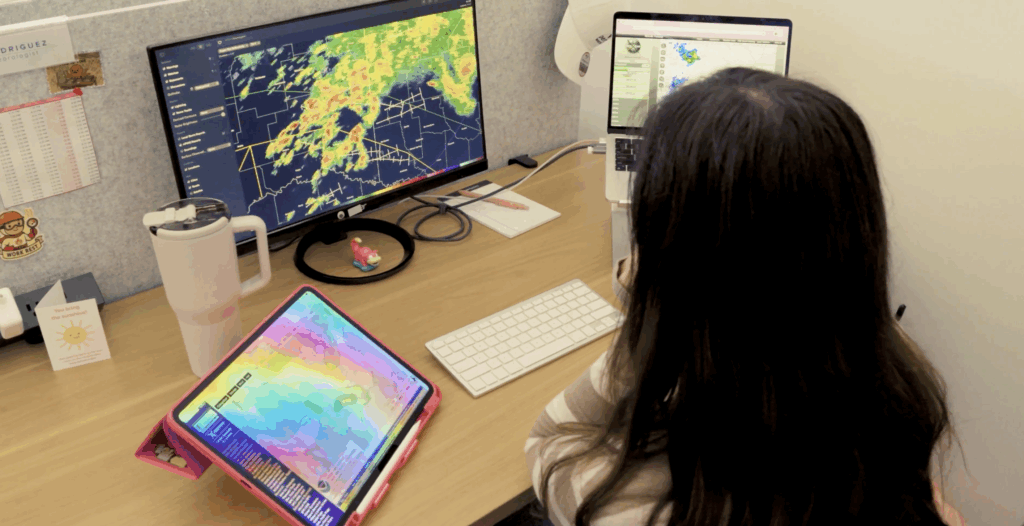
Software is great for data, but humans are needed for nuance. Complex collegiate athletics weather safety scenarios often involve travel logistics, TV slots, and bracket integrity.
Through the partnership, NJCAA staff gained access to Perry Weather’s on-call meteorologists. Now, when a storm line looks messy, Monaghan or Haley can pick up the phone.
“It allows us to ask the hard questions,” Haley says. “Do we move this game up four hours? Do we cancel and push to the next day? Having the ability to call a meteorologist makes life a lot easier.”
The “JuCo Grind” and the Impact on the Athlete
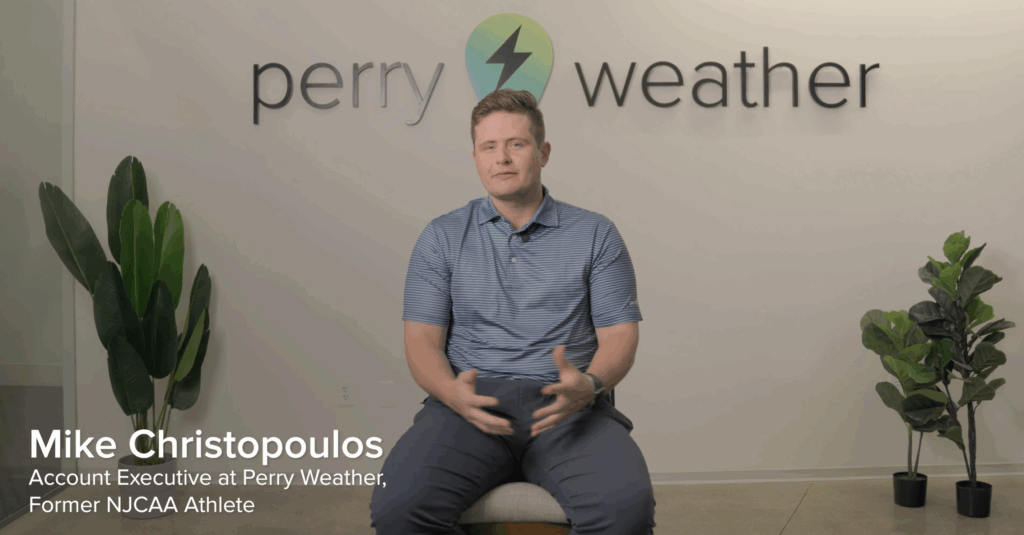
Mike Christopoulos, now an Account Executive at Perry Weather, knows this life better than anyone. Before he was helping schools manage safety, he was a JuCo baseball player himself—a transformative time that he credits with shaping his character and career.
“It is an absolute grind,” Christopoulos says. “Every single game feels like a playoff atmosphere. The energy is intense because you are fighting for your future with every pitch.”
In this high-pressure environment, a mishandled weather delay is more than an inconvenience; it can be devastating to a player’s trajectory.
The Momentum Killer
Christopoulos vividly recalls a specific game where his team drove 3.5 hours to Tampa. Just as they arrived, rain and lightning rolled in. Without a clear system to predict the storm’s end, the teams sat in the dugout for three and a half hours, paralyzed by uncertainty. They didn’t finish the game until 12:30 a.m.

“You can waste a pitcher in a big tournament game because of a delay like that,” Christopoulos notes, reflecting on the difference between the tools he had versus now.
“If we had Perry Weather back then, maybe we could have moved the game up. Maybe we push to tomorrow. It changes the game.”
By standardizing severe weather monitoring for sports, the NJCAA is protecting the competitive integrity of the moments that shaped Christopoulos and thousands like him.
- Fairness: No team is forced to play in unsafe conditions because a host “thinks it will pass.”
- Health: Pitchers and players aren’t left sitting in cold dugouts for indeterminate amounts of time, reducing injury risk.
- Experience: The championship remains a celebration of skill, not a test of patience.


Operational Excellence: The New Normal with Perry Weather
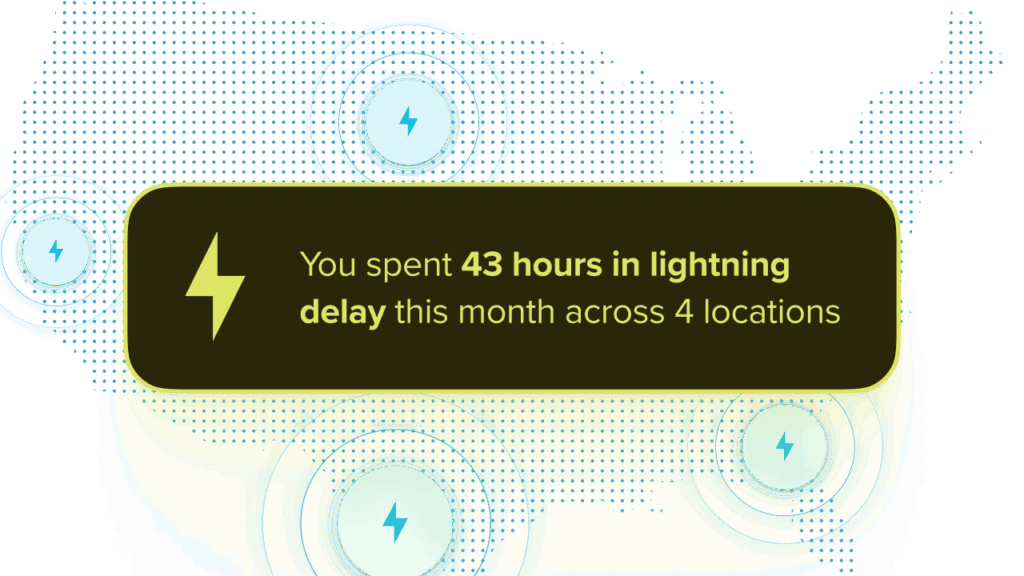
Today, the “Grey Zone” is gone. The NJCAA has successfully rolled out Perry Weather across its championship events. The “Before and After” comparison is stark.
Before:
- 10 different apps at 10 different sites.
- Confusion over when the 30-minute clock starts or resets.
- National staff fielding frantic calls for guidance.
- Coaches arguing over whether the lightning was “close enough.”
After:
- One source of truth on every phone.
- Automated countdowns visible to all staff.
- Meteorological consultation for complex decisions.
- A professional, streamlined operation.
“It elevates how we operate,” Monaghan says. “Our staff can be more efficient. Hosts understand where we are coming from. Most importantly, everyone involved knows there is a consistent standard.”


Lessons for Conference Leaders
The NJCAA’s journey offers a roadmap for any conference commissioner or athletic director struggling with managing weather delays in college sports.
1. Stop relying on patchwork solutions. Consumer apps are built for casual use, not liability management. If you are responsible for hundreds or thousands of athletes, “checking the radar” isn’t a policy.
2. Governance requires tools. Writing a safety policy is only half the battle. You need a tool that enforces that policy automatically. If your lightning policy says “10 miles,” your software should trigger at 10 miles—every time, at every site.
3. Invest in partners who invest in you. For the NJCAA, this wasn’t just a sponsorship logo on a backdrop. It was a service partnership. “Perry Weather has invested in the NJCAA, giving us access to keep our people safe,” Monaghan says.


Raising Safety Standards with Perry Weather

Ultimately, the NJCAA’s decision comes back to that dogpile in center field.
Whether it is a Division I powerhouse or a junior college in rural Kansas, the emotion of a championship is the same. The sacrifice required to get there is the same. The safety standards protecting those athletes should be the same, too.
By adopting Perry Weather, the NJCAA has moved from reactive guesswork to proactive weather safety. Now, the focus remains where it belongs: on the 60,000 student-athletes who see “Opportunities start here” not just as a motto, but as a promise.
Is your conference or athletic department still relying on free apps and guesswork?
Join the NJCAA and top professional leagues in adopting a unified standard for collegiate athletics weather safety. Don’t wait for the next storm to test your policy. Try Perry Weather for yourself with a 14-day free trial today.


